
Eichholtz Bust Hermes Statues
BUST HERMES STATUES
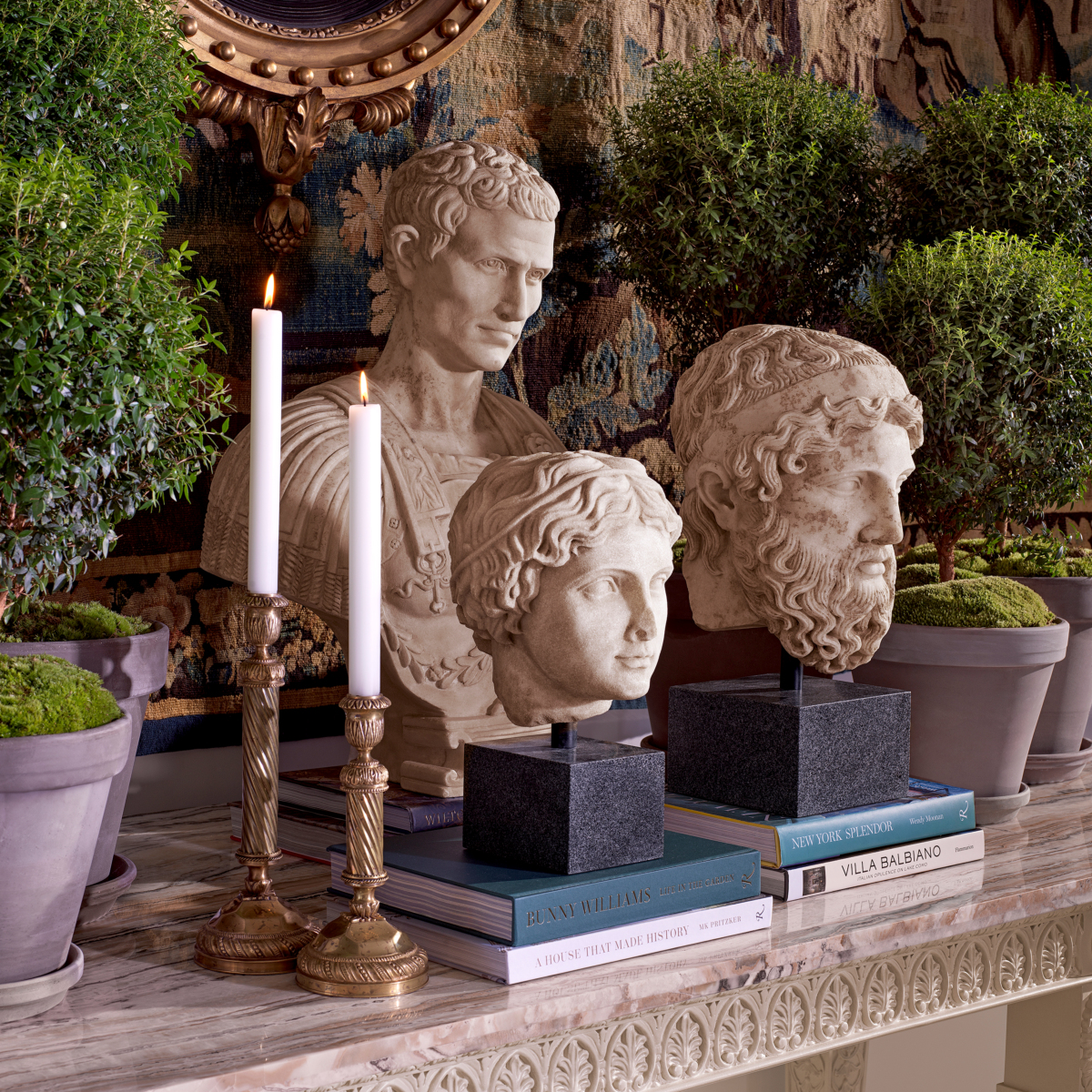
BUST HERMES STATUES
Marble antique look | black granite base
The Met x Eichholtz presents the Bust Hermes, inspired by the Roman copy (1st–2nd century CE) of a Greek marble herm (ca. 450–425 BCE)—a bust or head, often depicting the messenger god Hermes, rested on top of a stone pillar.
INFORMATION
BRAND
Eichholtz
PRODUCT TYPE
Prints
FEATURES
Timeless blend historical modern Museum inspired decorative piece
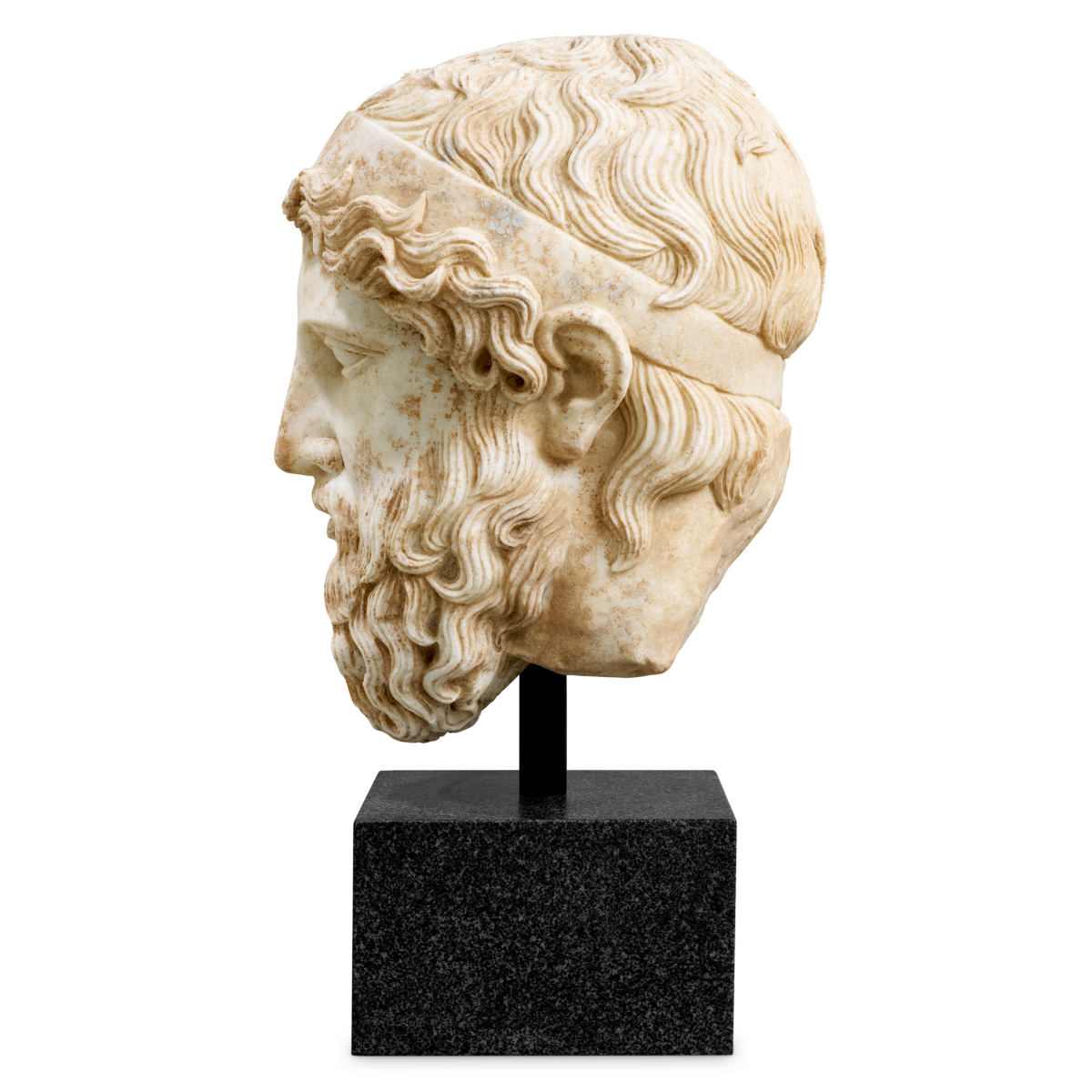
DETAIL
Featuring a marble finish and black granite base, our interpretation celebrates the grandeur of ancient Greek and Roman sculpture. Elevate your decor with this timeless blend of historical charm and modern elegance.
COLLECTION
Bust
PRODUCTION
Made in Netherlands
DIMENSIONS
- Width : 28 cm (11.0″)
- Length : 25 cm(9.84″)
- Height : 49.5 cm(19.49″)
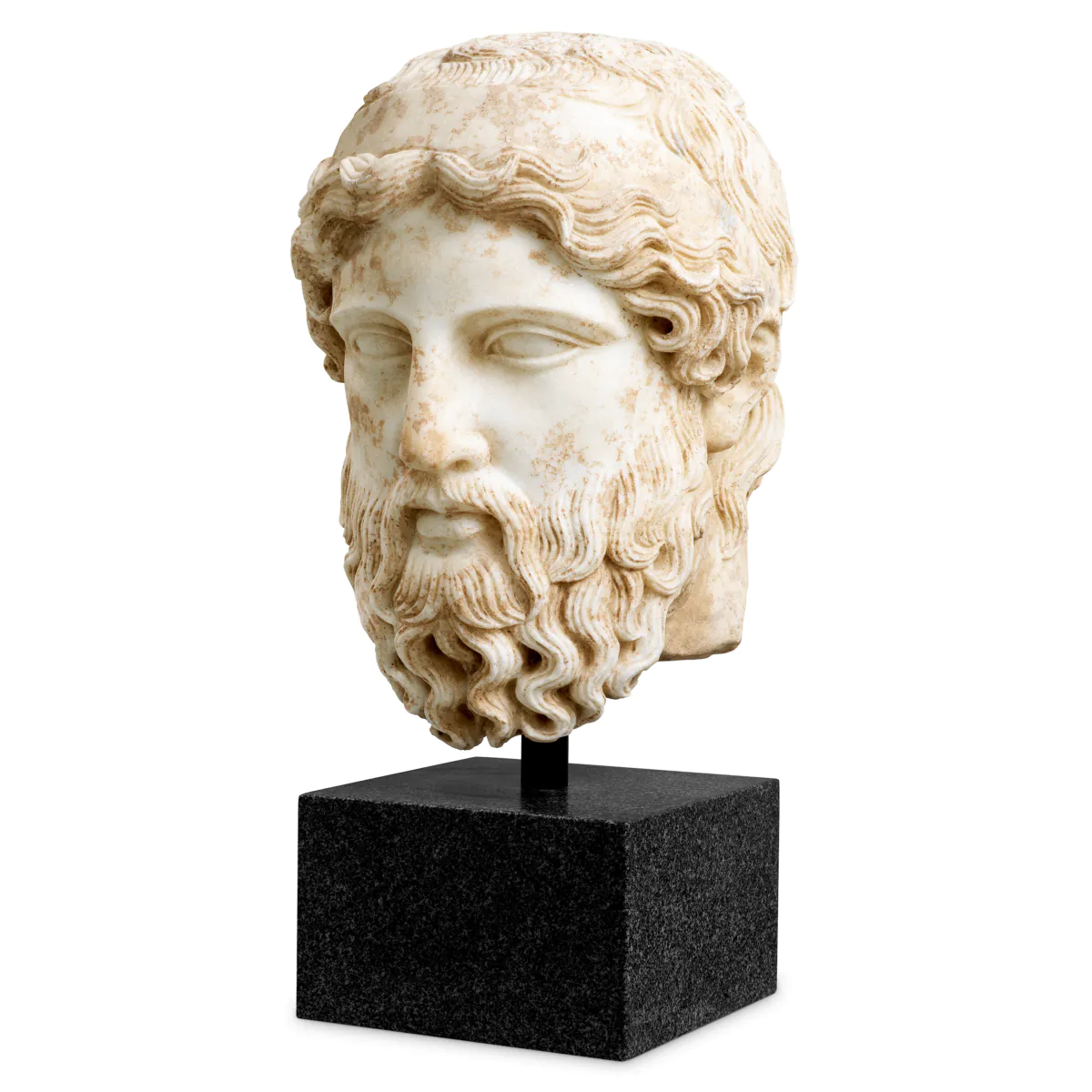
DETAIL
All mentioned dimensions are approximate and may vary by up to 2%.
HISTORIC PROVENANCE
Inspired by the Roman copy (1st–2nd century CE) of a Greek marble herm from 450–425 BCE, the Bust Hermes reflects the serene grandeur of classical portraits. Hermes, the messenger god, was associated with boundaries, and was often depicted near doorways and along the roadside, symbolizing protection. This piece echoes the timeless elegance of the original likeness at The Met.
INSPIRED BY
Inspired by classical antiquity
USE
- Indoor use
- Dry locations only
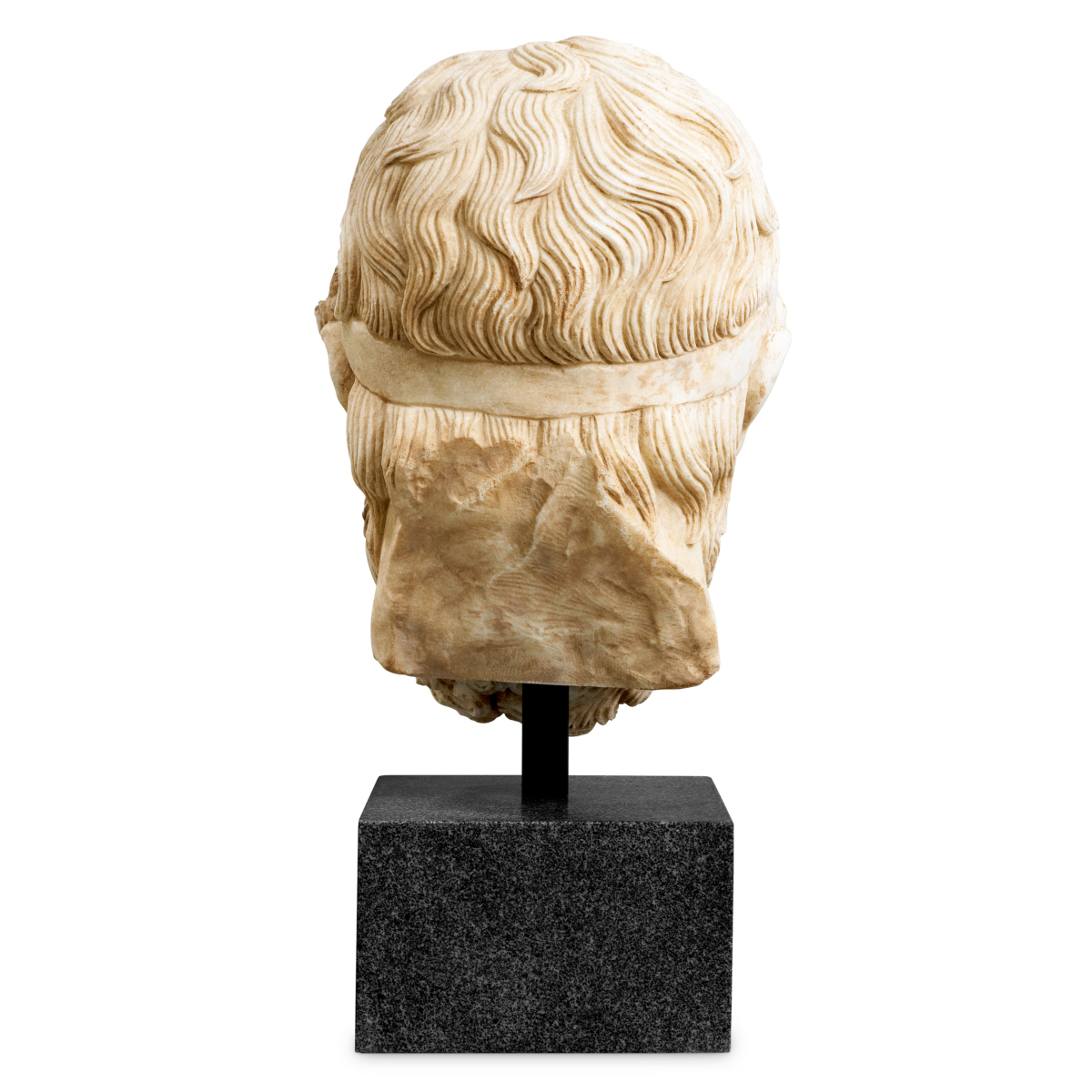
DECOR
Elevates refined interior decor
DEPICTS
Depicts Greek god Hermes
MATERIAL
Marble is a natural material, each piece differs in color and veining
CARE INSTRUCTIONS
CLEANING & MAINTENANCE
Dust marble, travertine & onyx surfaces twice per week with a soft cloth. They all stain very quickly, especially if liquids are left untouched on the surface. When you drop something, clean it up right away. Waiting too long can turn a simple spill into a stain, which can be difficult and sometimes even impossible to get rid of.
Immediately clean orange juice, coffee, wine, and other drinks (or food) with strong pigments, and rinse with a clean, damp cloth. Never leave water on marble or travertine surfaces as it can cause stains. Clean as gently as possible, never using abrasive cleaners or dusting sprays.
Wash marble, travertine & onyx periodically with a cloth dampened with lukewarm water, and if necessary, some mild dishwashing liquid. Only use soap solutions that are potent enough to wipe off the dirt but mild enough to keep the limestone unharmed. Gently run the cloth over the surface, making a circular motion in the spots that need a little extra pressure. Remove the soap with another damp cloth and wipe the limestone dry.
HOW TO CARE FOR MARBLE, TRAVERTINE & ONYX
Marble is limestone that has metamorphosed and combined with natural elements. It is veined with a variety of colors and patterns. Since marble is easily stained, etched, and dulled, it is important that you know how to take care of it. Travertine is also a form of limestone. This sedimentary rock is typically formed in springs, rivers, and lakes.
It often has a fibrous or concentric appearance and exists in white, tan, cream-coloured, and even rusty varieties. Onyx is a unique, translucent stone formed from layered deposits of quartz and calcite. It is known for its striking bands of color and smooth, glass-like surface. Since onyx is soft and prone to scratches and stains, proper care and gentle handling are essential to maintain its beauty.
There are a few basic rules for getting the most out of your marble furniture and ensuring its longevity:
- Be careful of wet rings forming on the surface after watering flowers or plants.
- Place coasters or trivets under glasses and dishes to prevent the formation of ring marks.
- Never expose marble or travertine furniture to sharp objects which can scratch the limestone.
- Never use vinegar, ammonia, bleach, lemon or orange to clean marble or travertine, as acids can cause these limestones to corrode.